Why an Early Exit in Paris Matters to Regular Players
When a leading Indonesian pair like Fajar/Fikri is stopped earlier than expected at the French Open 2026, the conversation naturally rushes toward tactics, form, and momentum. All fair. But for the millions who play doubles at community halls every week, the durable lesson is not in the scoreline. It is in what elite doubles exposes about the body: rallies are decided in a handful of seconds, repeated for over an hour, and the first system to run dry is almost always the anaerobic one — with the legs as its loudest alarm. Anyone who has played a hard match and groaned on the stairs the next morning knows the feeling.
Understanding why that happens, and which kind of leg training actually fixes it, turns a tournament headline into something useful for your own game.
The Anaerobic Engine Behind Doubles Badminton
Short bursts, steep cost
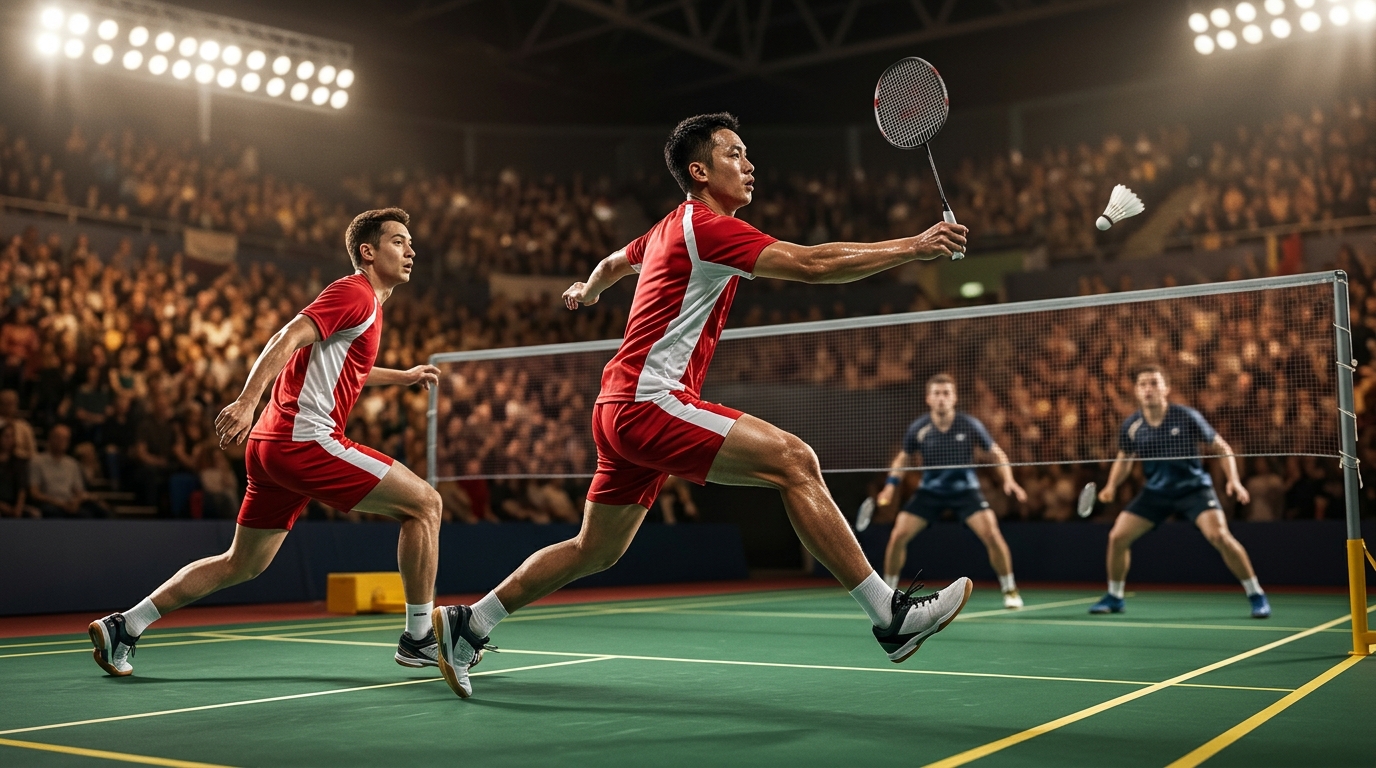
Doubles rallies are typically short — commonly a few seconds and rarely much past ten — yet they are dense with lunges, jumps, and flat net exchanges played at a pace singles rarely matches. That profile leans heavily on the anaerobic system: high effort supplied without waiting on steady oxygen delivery. The catches are that rest between rallies is brief and matches stretch long, so the aerobic system works as the recharge station. If refueling is slow while the bursts keep coming, quality drops in a predictable order — first the legs, then timing, then decision-making.
Why the legs quit first
A deep defensive lunge is mostly quads and glutes; the next explosive step is calves and ankles; the jump smash starts with the hips driving everything upward. When quick energy in those muscles thins out, technique is the first casualty. The smash loses its sting not because the arm forgot how to swing, but because the base beneath it arrived late. Footwork shifts from skipping to shuffling, and shuffling is where doubles points quietly go to die.
Leg Training That Actually Transfers
Lateral strength before heavy lifts
Court movement is sideways and diagonal, so training should live there too. Simple, low-equipment options:
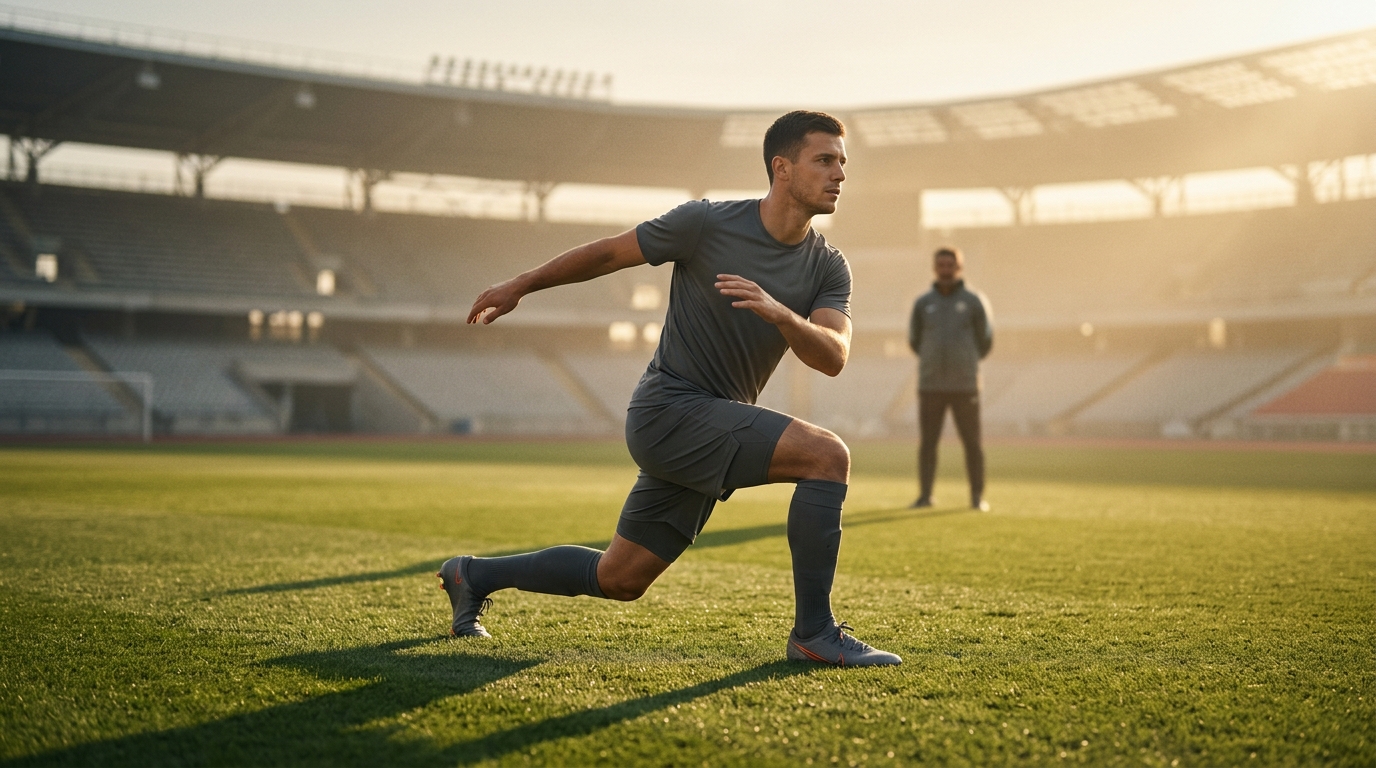
Lateral lunges and cossack squats for lunge depth and hip control
Split squats or rear-foot-elevated split squats for single-leg strength
Band-resisted side steps to wake up the stabilizers around the hips
Rope skipping in short intervals for ankle stiffness and rhythm
Repeated-sprint ability, not one heroic sprint
Doubles rarely asks for one sprint; it asks for the twentieth at the same quality. Shadow drills fit well here: six to ten bursts of roughly ten to fifteen seconds of court movement with short rests, stopping the moment form gets sloppy. The goal is not exhaustion — it is teaching the legs to stay springy while tired.
A realistic weekly template
Two court or sparring sessions for specificity
Two short strength blocks of thirty to forty minutes for legs and hips
One easy aerobic session — brisk walking, cycling, or a steady run — to grow the recharge system
Keep hard days hard and easy days genuinely easy; stacking everything into one heroic week is how the following two weeks get lost.
Recovery: The Half Nobody Posts About
Adaptation happens between sessions, not during them, so the boring essentials do most of the work:
Seven to nine hours of sleep, the cheapest performance upgrade available
Enough protein and fluids across the whole day, not only right after training
Light movement on rest days — an easy walk beats a stiff sofa
That daily base matters more than it looks. A gamified movement app like MoGerak, where steps, runs, and rides turn into coins, vouchers, and challenges, is a practical way to keep that base honest between court nights.
FAQ
How long before leg training shows up on court?
Most players notice small changes — snappier first steps, steadier lunges — within a few weeks of consistent work. Match-long steadiness usually takes closer to two or three months, depending on your starting point and how regular the sessions are.
Can I just add more sparring instead?
More match play is specific, but also chaotic and hard to dose. Targeted leg work lets you overload the exact muscles doubles punishes, in controlled portions that matches cannot safely deliver on their own.
The Takeaway
An early loss at a big event is a reminder, not a verdict: doubles badminton is an anaerobic sport wearing a racquet, and the legs are its foundation. Train them sideways, train them repeatedly, and let easy days and sleep do the rebuilding. Keep that up for a couple of months and the scoreboard tends to sort itself out.