Every season at the gym has the same villain: boredom. The treadmill is fine — your brain is the one that malfunctions. Jogging on a belt for thirty minutes, staring at the same wall, is one of the most motivation-draining routines fitness research has ever measured. That is where fitness gaming — also called exergaming — entered, and this time it is here to stay.
What is exergaming?
Exergaming is any fitness activity whose core mechanic is a game. It existed for decades (Dance Dance Revolution, Wii Fit, Ring Fit Adventure), but the 2020s version is dramatically more personal: GPS sensing, accelerometers, augmented reality, and AI cameras — all inside the smartphone that already sits in your pocket.
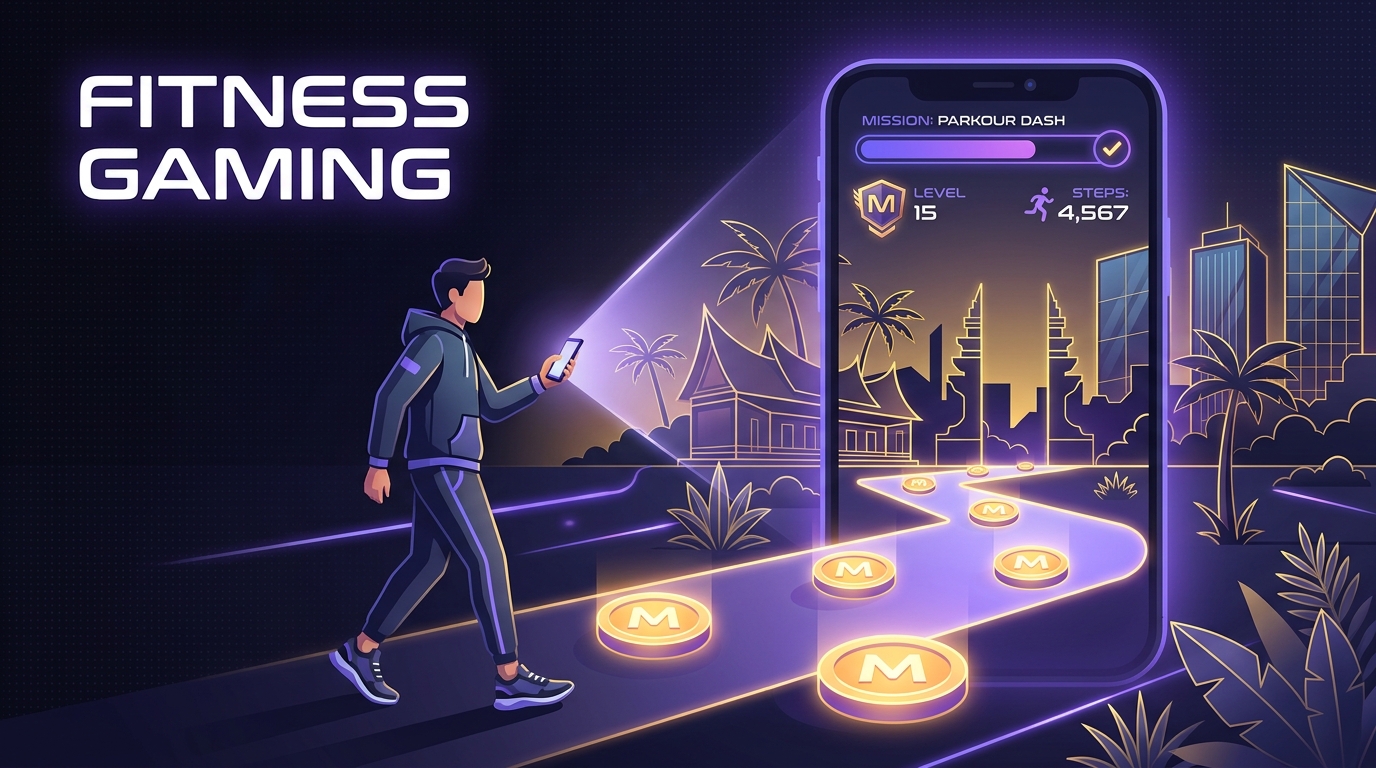
AR coin hunts overlay virtual rewards on real streets, so a walk becomes a treasure hunt.
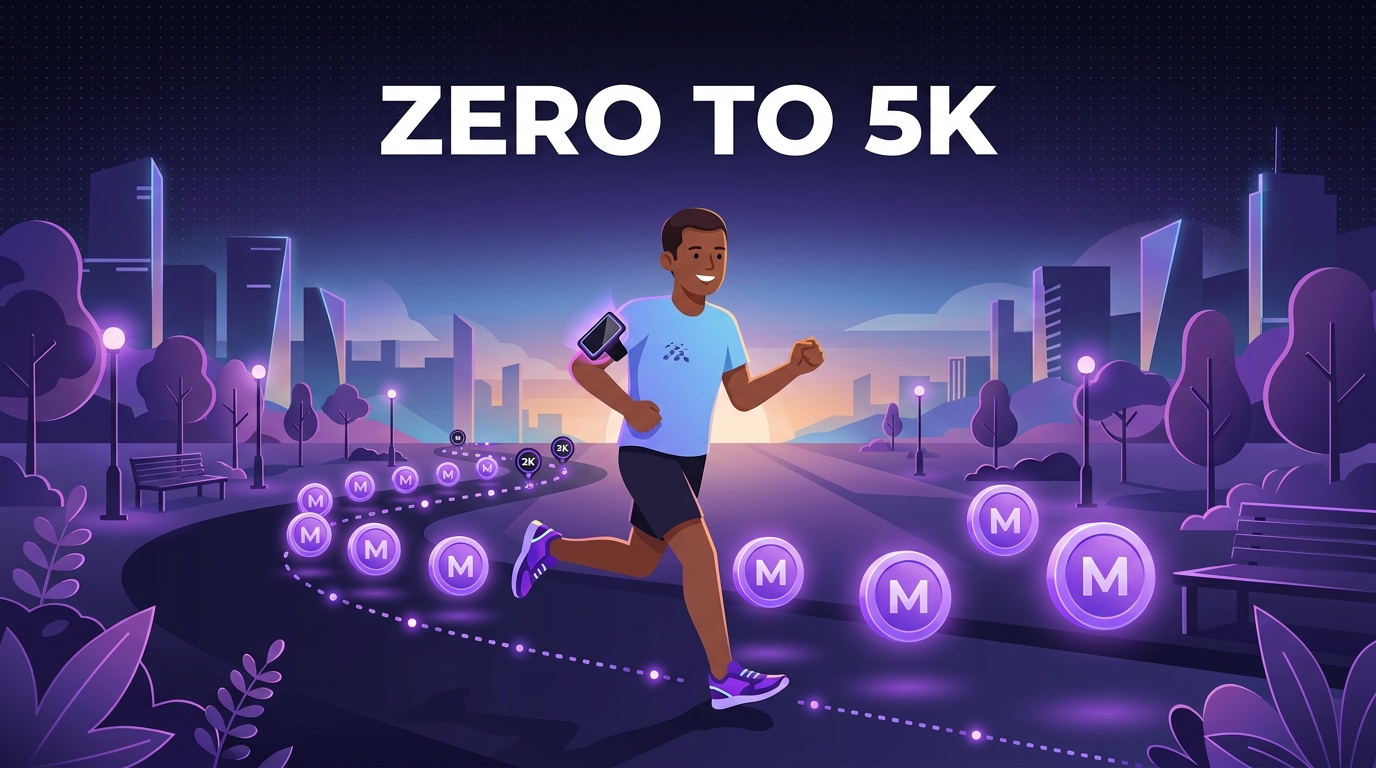
GPS routes and challenges turn a normal run into a collectible, scoreable mission.
Camera-based rep counting lets AI judge your push-up form without any wearables.
Why gamifying exercise actually works
The evidence is deeper than "it feels fun":
Immediate feedback. Games pay you instantly (points, coins, levels) while real fitness pays in weeks. Closing that feedback loop is the single biggest driver of habit formation.
Variable rewards. A coin you can see but must walk toward keeps attention locked far longer than a timer counting down.
Identity effects. Consistent play creates a self-image: "I'm the kind of person who hunts coins on my lunch break." That identity survives on days that feel hard.
Adherence studies. Trials on gamified exercise consistently show better adherence than classic programs of the same intensity — especially for people who were not exercising regularly before.
The three biggest myths
"It's just for kids." Most exergamers today are 18–45; the mechanics (walk 1 km, get an artificial reward) are universal.
"The game distracts from real effort." Good exergames are designed so play requires intensity — targets sit 15 meters apart, so speeding up is the only way to score.
"AR means glasses." Phone AR is already good enough; most AR fitness today runs from a single camera sensor.
How to try it in five minutes
Pick a park or a route you already walk.
Get an app that combines movement with real rewards — MoGerak, for example, turns GPS walks, runs, and cycling into coins redeemable for vouchers.
Set one small target (for example: "I'll collect 20 coins today"), not a vague one like "be active."
Keep a minimum streak: five days a week, even if a session is ten minutes long.
What comes next
Expect three things to get much better: AI camera coaching for more exercises, multiplayer real-world events in big cities (the parkrun of the gaming era), and token/commodity systems that make fitness activity feel like a bank account. Gym operators are starting to notice — some chains are adding in-gym exergaming stations this year.
The insight underneath it all is simple: the human brain was built to play, and exercise doesn't have to hurt to work. The most effective workout is often the one you keep forgetting to dread.