Why Fitness Decides Winning Streaks
A winning run is a stress test for the whole squad. League matches, cup ties, and travel stack up, and every extra game takes a quiet toll before it shows on the scoreboard. Coaches like to talk about squad depth, but depth only helps if the players coming in arrive match-ready — which loops straight back to conditioning and recovery.
Fitness compounds in the other direction, too. A team that recovers well can press harder, sprint more often, and keep its defensive shape late in games. A team that recovers poorly starts dropping deeper, and a deep block invites pressure. Stamina is not a nice-to-have; it is the platform every tactical idea stands on.
What a top-flight match actually demands
Professional outfield players commonly cover in the region of 10 kilometers per match, alternating jogging, cruising, and walking.
The decisive moments — accelerations, direction changes, duels — are short anaerobic bursts stacked on top of that aerobic base.
Matches every three to four days shrink the recovery window to roughly two effective days.
That combination explains why one sloppy recovery week can visibly flatten a lineup, while a well-managed one keeps a creative attacker dangerous until the final whistle.
Inside a Professional Recovery Playbook
Elite clubs treat the 72 hours after a match as seriously as the match itself. The visible part is ice baths and massage; the invisible part is far more mundane — and far easier to copy.
Sleep: the quietest performance enhancer
Sleep is when muscle repair, hormonal balance, and motor-memory consolidation happen. Professionals protect a consistent bedtime, a cool dark room, and short naps on heavy travel days. Nothing exotic, just rest that is non-negotiable.
Fuel, fluids, and timing
Carbohydrates refill the muscle glycogen a hard match drains, protein supplies the building blocks for repair, and fluids with electrolytes replace what sweat takes away. Timing matters as much as the menu: a proper meal anchored soon after the final whistle starts the rebuild early.
Easy days are training too
The day after a match is rarely total rest. It is usually light by design — an easy spin on a stationary bike, mobility work, a pool session. The goal is blood flow without load, so stiffness leaves the legs without new fatigue arriving.
Stamina Lessons You Can Borrow
You do not need a Serie A calendar to use the same logic. The principles scale down cleanly to anyone who walks, runs, or cycles:
Build the aerobic base first: keep most sessions at a pace where you can still hold a conversation.
Add intensity sparingly: once you are consistent, one weekly interval session (for example, 4–6 brisk one-minute efforts) is enough to move the needle.
Respect the 72-hour rhythm: hard day, easy day, then a true rest day — adaptation happens between sessions, not during them.
Grow volume gradually: a small weekly increase, often framed as around ten percent, beats heroic jumps that end in injury.
Read the simple signals: heavy legs, poor sleep, and a short temper are your body's version of a late-game dip.
From the Pitch to Your Daily Steps
Here is the practical bridge. A footballer's week is essentially walking, easy running, and hard efforts woven together — the same texture a healthy everyday routine can have. If motivation is the hard part, make the movement loop visible and rewarding: a gamified movement app like MoGerak turns daily steps, runs, or rides into coins, challenges, and vouchers, so even a recovery stroll feels like a mission with a score attached. The gamification itself does not build your stamina — your consistency does — but it removes the friction that usually breaks consistency first.
FAQ
How long does it take to build football-style stamina? Early wins come quickly: with three to five easy-paced sessions a week, most beginners notice smoother breathing and faster recovery within a few weeks. Deeper endurance — the kind that carries you through a full match or a long run — keeps building over months of steady repetition.
Should I still train when my legs feel heavy? Treat heavy legs as information, not a challenge. Swap the intense session for a walk, an easy ride, or mobility work, exactly the way clubs use light days between matches. You will usually return to hard training sooner than if you had pushed through.
Final Takeaway
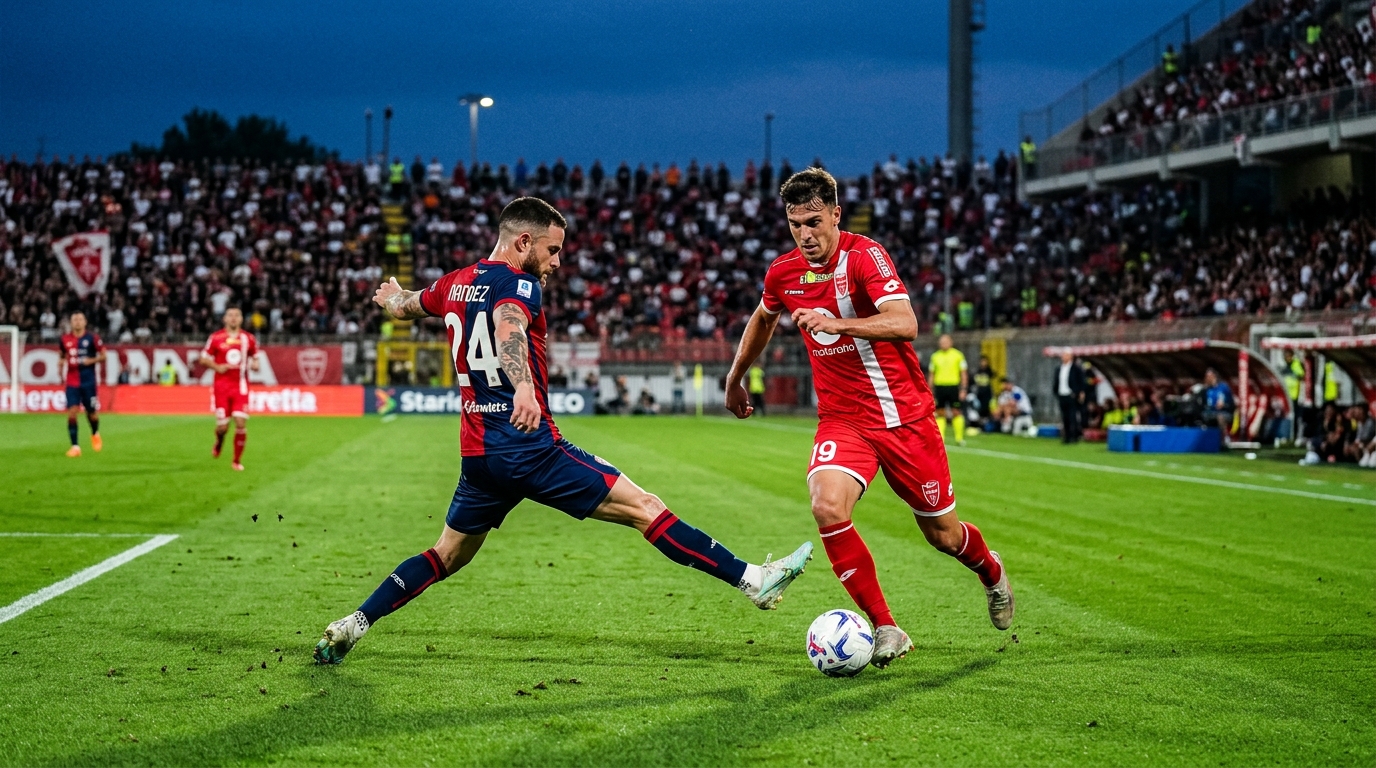
Monza chasing a fifth straight win makes a fun headline, but the durable lesson is procedural: fitness is built in training and kept through recovery. Sleep like it matters, eat to refuel, keep most efforts easy, and sprinkle in intensity only once the base is there. Do that for a month and the scoreline that changes is your own — more evening energy, easier stairs, longer walks that you barely notice. That is a streak worth chasing.
Ketika laga Monza vs Cagliari tiba-tiba ramai dicari, kebanyakan orang jelas sedang berburu skor. Padahal cerita yang lebih menarik justru tersembunyi di balik sorotan: bagaimana sebuah skuat menjaga kondisi kaki tetap segar sampai mampu mengejar kemenangan kelima beruntun, dan mengapa kebugaran pemain semacam Daniel Maldini naik menjadi cerita tersendiri. Rentetan kemenangan di sepak bola hampir tidak pernah soal bakat semata. Itu buah dari pengelolaan beban latihan, tidur, nutrisi, dan rotasi pemain yang rapi, sampai tim masih punya sisa tenaga di menit ke-85 — persis saat lawan yang kelelahan mulai melakukan kesalahan. Nah, justru bagian inilah yang bisa dipinjam siapa saja yang sedang mengejar kebugaran.