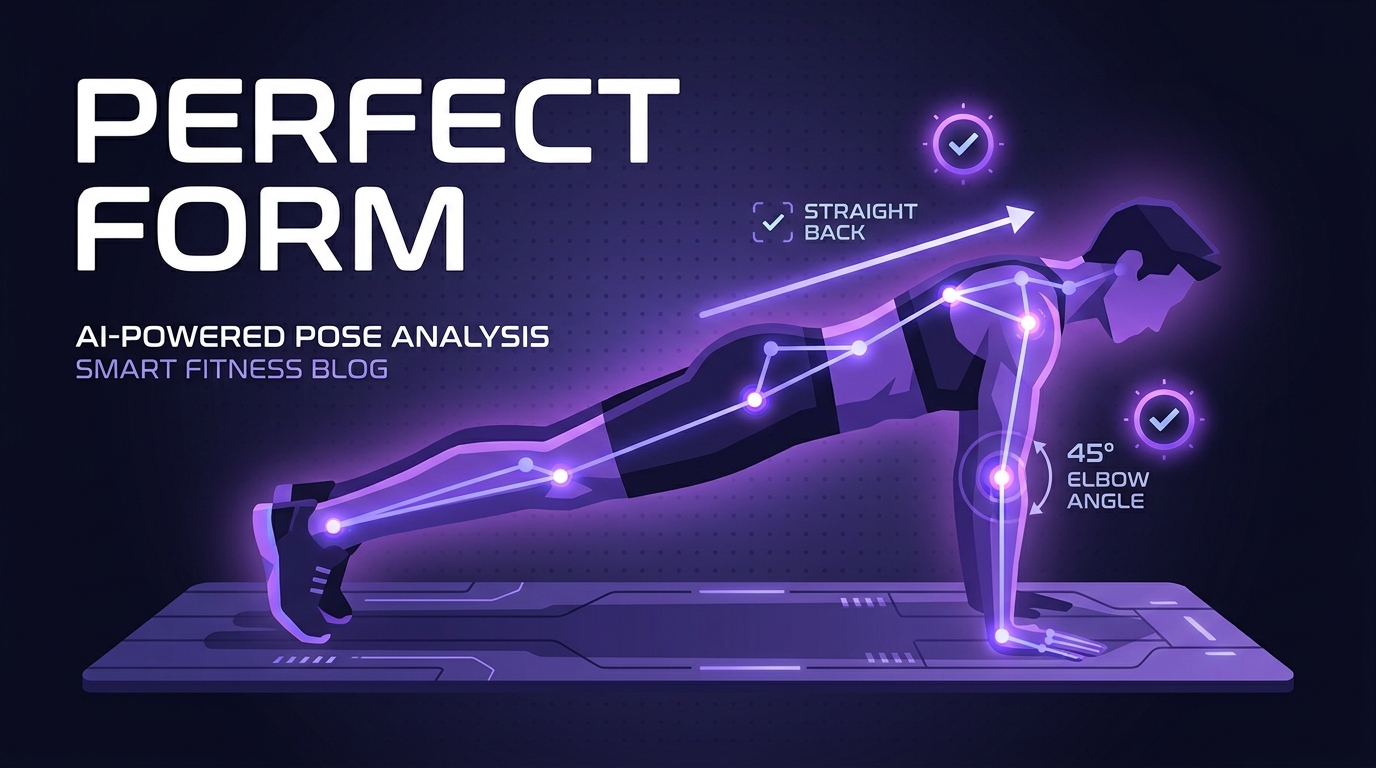
Push-ups and sit-ups are the two most practiced bodyweight exercises in the world — and the two most commonly performed with broken form. The good news: fixing your form takes one afternoon, and it instantly makes every rep more effective.
The push-up, done properly
A push-up is a moving plank. If you remember one thing, remember that.
Setup
Hands slightly wider than shoulder-width, directly under your shoulders or an inch lower.
Body forms a straight line from heel to head: glutes and core tight, no sag at the hips.
Eyes look at a spot about 30 cm in front of your fingers — not straight down, not forward.
The movement
Lower under control until your chest is about a fist from the floor (elbows around 45°, not flared to 90°).
Press back up fully, but do not lock out and rest at the top.
Skip the fine math: use the checklist — elbows 45°, hips level, chest leads the descent.
The four most common mistakes
Sagging hips — the core has quit; the lower back takes the load.
Hips travelling forward or backward — reps stop counting for chest and start taxing shoulders.
Half range — stopping 15 cm above the floor removes most of the chest stimulus.
Crane neck — the neck does the work, not the chest.
If full push-ups are not possible yet, are knee push-ups the answer? They are legitimate, but an even smoother progression is the incline push-up: hands on a table first, then stairs, then the floor. When you can do ten clean floor reps, you have arrived.
The sit-up, without the wreckage
Traditional full sit-ups pull heavily on the hip flexors and, done carelessly, on the lower back. Modern practice has shifted toward a partial curl-up: it trains the abs, and it treats your spine as a friend, not an enemy.
Lie on your back, knees bent, feet flat. Fingertips rest lightly at your temples — never pulled behind the head.
Lower your lower back to the floor, then curl your shoulder blades just off the ground while keeping your chin off your chest.
Exhale on the way up, pause for one beat, lower under control. That pause does more for core strength than ten rushed reps.
A contorted neck or a yank from the hands are both red flags — slow down and let the abs do the work.
How many reps should you aim for?
Total beginners: 2–3 sets of 5–8 push-ups and 10–15 curl-ups, three times a week.
Consistent doers: 3 sets of 10–15 push-ups, 20 curl-ups.
Fitness fans: 20+ clean push-ups and 30+ curl-ups per set.
Quality beats quantity every single time: eight honest reps beat thirty broken ones, both in results and in injury risk.
Camera-based counting: form feedback for free
One reason camera-based fitness apps are popular: a camera can observe posture in a way a mirror never can. MoGerak's push-up and sit-up modes use on-device AI pose detection to count only reps with acceptable form — which quietly trains users to build clean technique while they build volume. Whether you use an app or a training partner, external feedback on your form speeds up progress at zero cost.
A simple weekly template
Day 1: 3 sets of push-ups + 3 sets of curl-ups.
Day 2: walk, run, or cycle (recovery-style).
Day 3: repeat Day 1.
Day 4: rest or light stretching.
In two months, that schedule alone will visibly change your upper body and core. No gym required.