Why the Tumbler Trend Is a Hydration Wake-Up Call
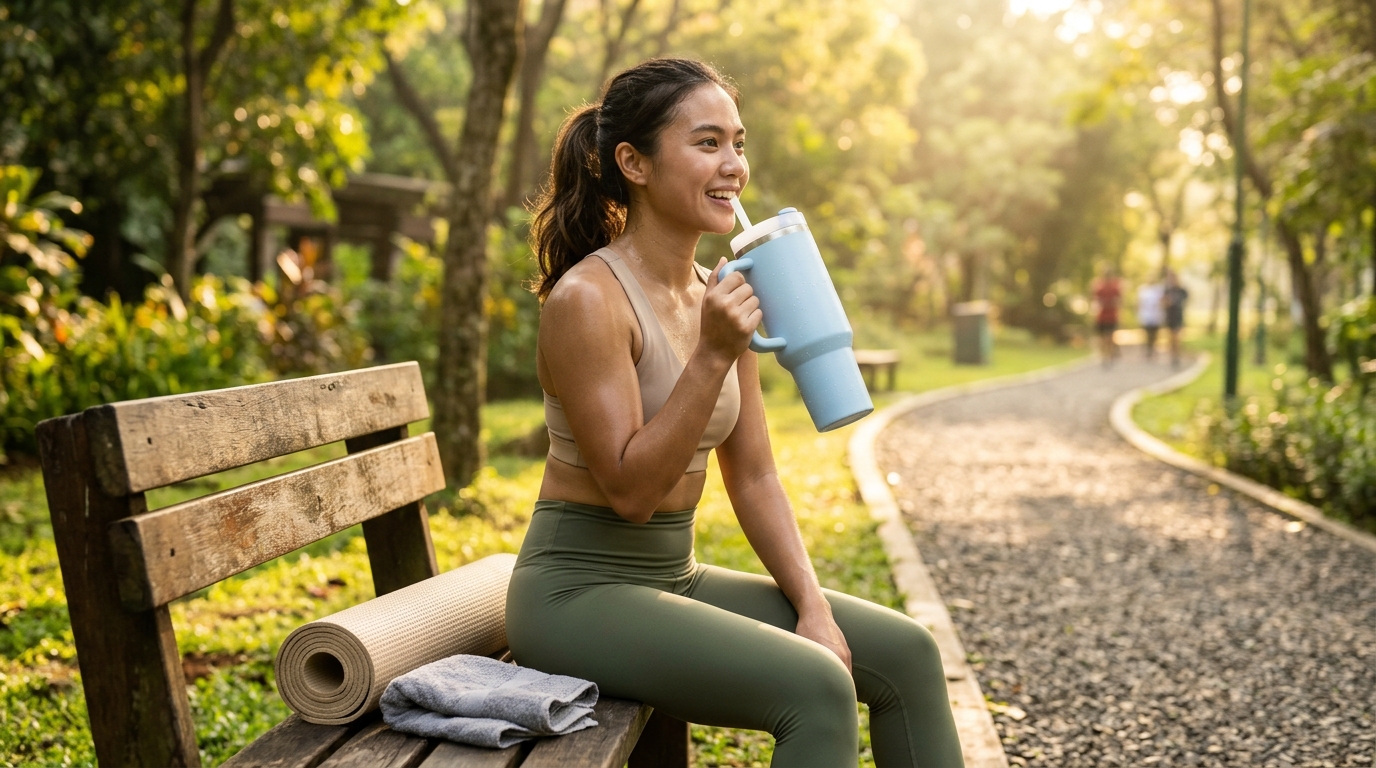
Scroll through any social feed this week and you will almost certainly meet one: a big, pastel-colored tumbler with a handle and a straw, currently among the most talked-about objects in fitness and lifestyle circles. The surge of attention around the Stanley tumbler has turned plain water into a kind of status accessory, complete with restock alerts, collectible colorways, and unboxing videos.
Strip away the hype, though, and something genuinely useful is happening: many people are paying closer attention to their fluid intake than they did last year. That is the angle worth borrowing. A trendy bottle will not upgrade your training by itself, but the moment is a perfect excuse to review how you hydrate before, during, and after exercise. Fluid balance is one of the few performance variables you can manage at almost no cost, and small mistakes — drinking too little across the day, or gulping a large volume all at once — show up quickly as fatigue, headaches, dizziness, and slow recovery.
Why the bottle itself quietly helps
The features behind the popularity are also the features that build a drinking habit:
Visible volume, so you can see progress instead of guessing how much you have had
A straw or one-handed lid, which tends to make you sip more often without thinking
Insulation, because cool water stays pleasant to drink through long days
Enough capacity to cover a full workout without constant refills
Before Exercise: Start Hydrated, Not Overfilled
Hydration is not something you fix in the five minutes before a workout. What matters most is your day-to-day baseline, because arriving even mildly under-hydrated makes every other strategy less effective. For many active adults, roughly two to two-and-a-half liters of total fluids per day — mostly water, with the rest coming from food and other drinks — is a reasonable starting point to adjust from.
A simple pre-workout checklist
Drink steadily through the day instead of saving everything for one big catch-up
Use urine color as a no-tools checkpoint: pale yellow suggests you are in a reasonable range
Top up with about one to two glasses (roughly 200–400 ml) in the 30–60 minutes before training
Avoid very large doses right before running or jumping if a sloshing stomach bothers you
These habits sound boring precisely because they work. A large bottle with visible volume acts as a passive reminder, so sipping becomes something you do alongside other things rather than one more task to remember.
During Exercise: Match Fluid to Sweat, Not to Habit
Once you start moving, the goal shifts from general hydration to replacing what you lose through sweat. Those losses vary enormously between people and between sessions — heat, humidity, intensity, body size, and clothing all play a part — which is why rigid rules age badly. As a broad frame of reference, an hour of moderate effort commonly produces losses somewhere around half a liter to a liter, and hot outdoor sessions can push well beyond that.
Practical rules of thumb
Sip small amounts every 10–15 minutes in sessions longer than about an hour, rather than waiting until you feel very thirsty
Try the weigh-in trick on training days: a body-mass drop of around 1–2% after a session is a rough flag that you lost meaningful fluid and should rehydrate deliberately
Treat thirst as a correction, not the only plan — it tends to lag behind actual losses, especially in cold weather and for older adults
When sports drinks earn their place
Plain water covers most sessions just fine. Electrolyte drinks start to earn their spot when efforts stretch past 60–90 minutes, when you sweat heavily in the heat, or when you are managing fluids around back-to-back training days. Outside those windows, they are a convenience rather than a necessity — for a 30-minute jog or a casual gym visit, water is genuinely enough.
After Exercise: Rehydration Is Part of Recovery
The session ends, but the fluid ledger does not. You keep losing water through breath and, for a while, through sweat, so recovery hydration has a longer horizon than the cool-down. Aim for pale-yellow urine over the following hours, spread across water, other drinks, and food rather than one forced chug.
A simple structure works: rehydrate with water first, add sodium when the session was long or very sweaty — salty food or a recovery drink both do the job — and eat carbohydrate-rich meals, since your body uses them to help hold onto fluid. If you weigh yourself, replacing slightly more than the weight you lost is a common, sensible target. None of this requires a special product; consistency beats novelty.
Habit stacking makes it stick
If you already track daily steps, runs, or rides in a gamified movement app like MoGerak — where consistent activity earns coins that can be redeemed for vouchers and challenges — attach your water check-ins to the same routine. When hydration piggybacks on a habit that already runs, both become easier to keep.
FAQ
How much water should I drink daily if I exercise regularly?
There is no single number for everyone. Many active adults do well with roughly two to two-and-a-half liters of total fluids, then add more on training days based on how much they sweat — harder sessions, heat, and longer workouts all raise the need. Pale-yellow urine and the weigh-in trick above are simpler daily guides than any fixed formula.
Is an insulated tumbler worth buying, or just a trend?
You do not need one to stay hydrated; any bottle works. That said, the features driving the trend — capacity, insulation, a straw, visible volume — genuinely lower the friction of drinking more often. If they get you to sip consistently, the purchase is doing its job; if not, a simple bottle plus a reminder habit does the same work for less money.
Final Takeaway
The Stanley tumbler may be this season's spark, but the knowledge behind it does not expire: start hydrated, drink to your sweat while you move, and rebuild fluids as part of recovery. Pair a bottle you enjoy using with checkpoints you can actually observe — urine color, body-mass changes, how you feel — and hydration stops being guesswork. Today's session and tomorrow's will both feel the difference.