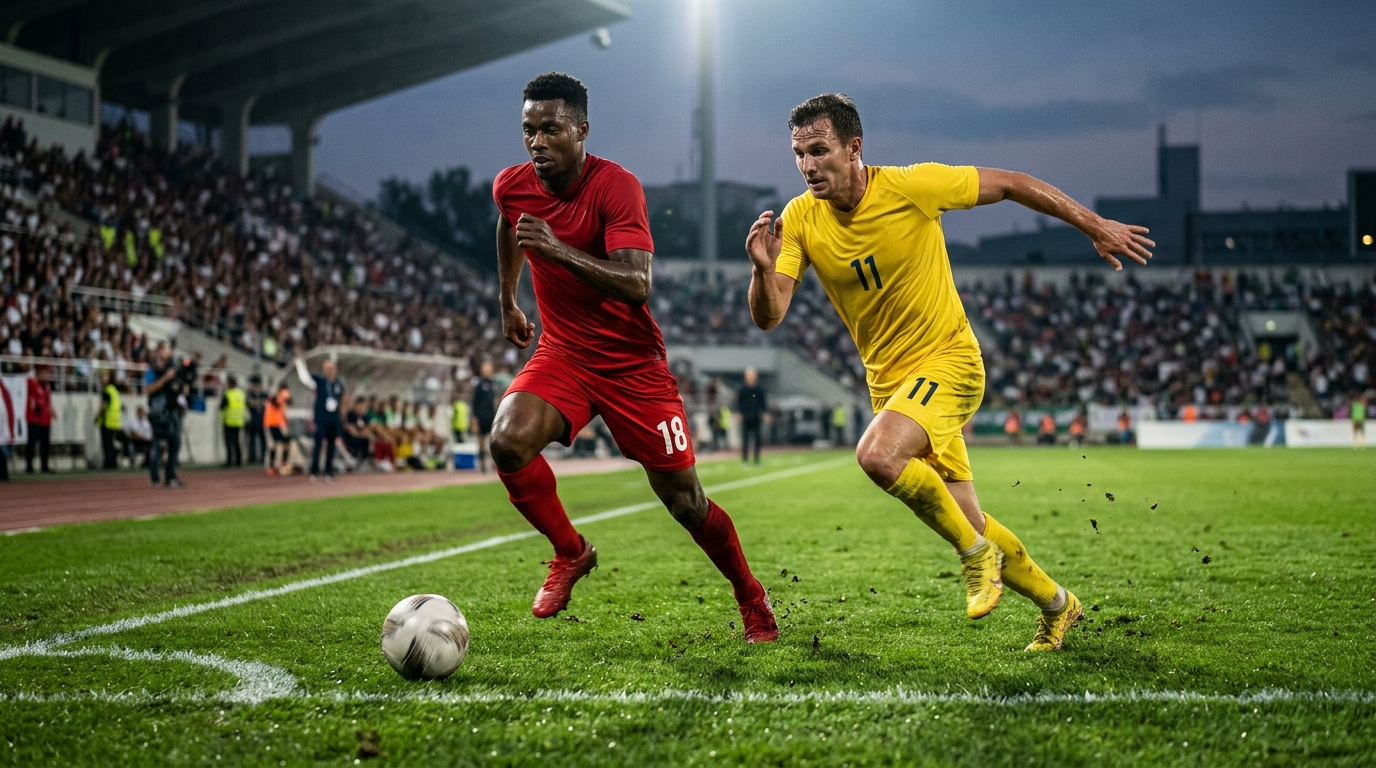
Why Parma vs Torino Is a Fitness Story, Not Just a Fixture
When a Parma vs Torino matchup starts trending, most coverage focuses on form, tactics, and predicted lineups. There is another layer worth exploring: matches between evenly matched Serie A sides are often decided less by star power and more by who runs harder in the final twenty minutes. Fitness depth, rotation quality, and the conditioning blocks built during the training week quietly shape these results, which makes the fixture a perfect excuse to talk about the physical side of professional football — and what everyday movers can legitimately borrow from it.
The reason this angle matters now is simple: high-profile fixtures pull casual audiences back to the sport, and many of those viewers are also people trying to run their first 5K, lose a few kilos, or simply sit less during the day. The gap between a Serie A athlete and a weekend jogger is enormous, but the underlying principles — aerobic base, repeated sprint ability, strength, and recovery — scale down remarkably well.
The Physical Demands Behind Every Serie A Minute
Endurance: The Invisible Stat
Cameras follow the ball, but conditioning staff watch the numbers behind it. As a safe general picture, elite outfield players commonly cover in the region of 9–11 km per match, and a large share of that distance is accumulated at moderate speeds between bursts of high-intensity action. Midfielders typically post the highest totals because they link defense and attack, while defenders cover less ground but absorb far more physical duels.
Repeated Sprints and Change of Direction
The decisive actions in football are rarely long runs. They are short sprints — often under 20–30 meters — combined with sharp decelerations, cuts, and jumps, repeated dozens of times across 90 minutes. This repeated-sprint profile is what fatigues hamstrings, groins, and ankles, and it explains why plain long-distance jogging alone does not fully prepare you for court- or pitch-based sports.
Conditioning Lessons You Can Borrow From Pro Football
You do not need a training complex in Emilia-Romagna to apply the logic of professional preparation. Four pillars transfer almost directly:
Aerobic base first. Comfortable, conversational-pace sessions — steady walking, jogging, cycling, or swimming — build the engine that everything else sits on.
One intensity day per week. Short intervals, for example 6–10 reps of 20–40 seconds fast with easy recovery, mimic the sport's stop-start demands without wrecking your schedule.
Strength twice a week. Squats, hinges, lunges, and calf work protect joints and make your sprinting mechanics more efficient.
Change of direction, gently. Simple agility drills — zig-zag jogging, lateral shuffles, skipping — train the ankle and hip control that protects knees.
A Simple Weekly Template
Mon: 30–40 minutes easy pace (walk, jog, or ride)
Tue: full-body strength, around 40 minutes
Thu: intervals, 20–25 minutes including warm-up
Sat: longer easy session, 45–60 minutes
Daily: 7,000–10,000 steps as a low-effort baseline
Staying Available: Injury-Proofing the Way Elite Squads Do
Professional clubs obsess over "availability" because an injured player helps nobody. The habits they drill are just as useful for someone balancing a desk job with a fitness goal:
Long, unhurried warm-ups before intensity — 10–15 minutes is a realistic minimum.
Mobility work for hips, ankles, and hamstrings on rest days.
Gradual load management: raise weekly volume slowly rather than in spikes; a common conservative guideline is roughly 10% per week.
Sleep and food as non-negotiables — most adults do well with around 7–9 hours of sleep and protein spread across meals.
FAQ
Q: How far do footballers actually run in a match? A: As a general, widely reported range, elite outfield players cover roughly 9–11 km per game, with midfielders near the top of that band. Exact numbers vary by position, playing style, and match tempo, so treat any single figure as a broad estimate rather than a precise rule.
Q: Can a beginner really train like a footballer? A: The structure, yes; the volume, no. Beginners benefit most from the pro pattern — regular aerobic work, two strength sessions, gradual progression — while keeping intensity days short and rest genuine. Scaling down from elite load is not weakness; it is exactly how conditioning science is supposed to work.
Matchday Takeaway: Build Your Own Weekly Rhythm
Parma vs Torino will eventually fade from trending lists, but the conditioning culture behind matches like it is evergreen: build an aerobic base, train sprints and strength in small doses, and protect recovery as if it were part of the plan — because it is. If you want that rhythm to stick, a gamified movement app such as MoGerak turns daily steps, runs, and rides into coins you can redeem for vouchers and challenges, giving your inner competitor a season-long scoreboard of its own.